Have you noticed recently how there is increasing talk of vaccines against cancer?
As lay people, this might seem rather confusing. We know that the medical establishment have urged us for a long time to have all our immunisations for infectious diseases.
We are also made aware that cancer organisations have worked for decades, putting millions of pounds in to cancer research which is increasingly complex and often focused on inherited genetic causes.
Cancer Research UK makes its opinion crystal clear on its website: 'Cancer is not in any sense an infectious disease.'
So how come the major research breakthroughs (setting to one side more effective drugs to slow down, but not cure, cancers) have been in cancers like cervical or liver cancer, where the cause is shown to be a specific virus.
Cancer Research UK, while relaying some helpful virus-specific advice on its website, still plays this down incredibly by saying: 'Cancer...represents a very rare accident of long-term infection with such a virus.'
But now lets hear from Paul Ewald, evolutionary biologist and the first recipient of the George R. Burch Fellowship in Theoretic Medicine and Affiliated Sciences:'Back in 1975, mainstream medicine agreed that about 0.1% of human cancer cases were caused by pathogens. When it came to the rest of cases, their view was that they were probably caused by a combination of inherited predispositions and mutagens.
'Then in 1985, the percentage of cancer cases they tied to pathogens was 3%, and they continued to make the same argument about the remaining cases. In 1995 the percent of pathogen-induced cancer cases was accepted to be around 10%.
'Now, we’re at 20%. Still, mainstream medicine contends that the other 80% of cases do not have an infectious cause, but the question is – do you believe them anymore?'
Another very recent and conclusive addition to this crowd of infectious connections to cancer came in a study published in May by the Institute of Genetics and Molecular Medicine at the University of Edinburgh (Attaching and Effacing Escherichia Coli downregulate DNA Mismatch Repair Protein In Vitro and are associated with colorectal adenocarcinomas in humans: Oliver D.K. Maddocks et al).
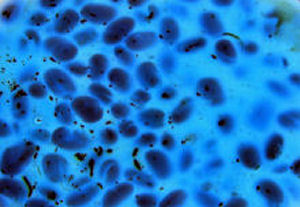
In a brilliant paper, worthy of a Crystal Mark from the Plain English Campaign, it persuasively 'demonstrates for the first time' the link between cancer of the colon and bacteria able to attach themselves firmly to cells inside the colon. Up to 100 were found hiding in a single cell.
Not only that, but the research scientists also say their study has uncovered the mechanism the bacteria uses to shut off the colon cells' ability to protect themselves against dangerous genetic mutation. This may be how the bacteria possibly causes colon cancer, but proof will only come from further study.
Interestingly, they note a 'striking similarity' with the bacteria helicobacter pylori, which also interferes with the mechanisms of gastric cells and causes stomach cancer. For a long time H.pylori as the known cause of stomach ulcers was ignored by the medical establishment too, while doctors still hector patients about helping themselves by avoiding stress (for pity's sake!).
With more and more research like University of Edinburgh's study coming to light - but repeatedly ignored by frontline medical staff - how long do we have to wait in pain and ill health before our doctors take a closer look at the infections we have each collected in our bodies? Until it's too late?


 Posts
Posts

