Tuesday, 24 November 2009

Why am I so tired?!


Everyone's saying it at the moment. Everyone's feeling it. Why?
Hibernation is often the next word out of our mouths – we so envy the squirrels and badgers as they curl up in the warm, and we moan at our bosses for not letting us stay under the duvet each morning.
As autumn and winter set in we seem to be torn over which is the more natural response. Shall we give in to our body's desire for more rest? Or seek more of the natural substances which we believe are good for us (sunshine, vitamin pills, fresh fruit and vegetables) so our bodies can keep active as we aim for a healthy life?
A big factor at this time of year is the number of apparent viruses and infections. We refer to these as bugs 'going round' and comment that we have 'caught' something.
We say we can't 'shake off this chest infection', or we have 'passed our cough on' to another member of the family.
There is no doubt that microbes are very efficient at getting from one human host to another through coughing, sneezing or hands. Yet microbiologists are now beginning to understand that bacteria and viruses can sometimes hang around in all sorts of places in our body without the immune system showing signs of responding at all.
Admittedly a few factors in infectious transmission involve the weather – low temperatures and a low total moisture content of the air create ideal conditions for flu viruses to attach themselves to the mucus-producing surfaces of the body (often the nasal passages).

Research is beginning to show that our immune systems are not always under sudden threat of overwhelming attack when our bodies respond. Our immune systems may instead have 'woken up' to a danger that is already present.
But why might our immune systems go to sleep until then? Surely they are on guard all the time? (See my first blog post for one suggested reason).
A simplified summary of our complex immune response splits it in to two main parts: the innate immune system, which is not yet well understood but involves receptors mounting a standard defence; and the adaptive immune system, where the different types of white blood cells recognise invading pathogens, attack and destroy them.
A healthy immune response in a human body will, once it is fully aware of the danger, rush to remove it. The results of this process can be high temperature, production of mucus, fatigue, inflammation, vomiting, coughing or skin outbreaks – anything to help the body kill off or expel the bacteria.
Does that seem strange to associate these awful symptoms with being 'healthy' internally? Our bodies do so much without us knowing anything about it and scientists are beginning to note that these apparently undesirable symptoms can be helpful, natural responses that keep us healthy.

So, what about times when we only feel tired?
Sleep is an amazingly mysterious thing that is still the focus of much research. But there is already evidence that sufficient sleep contributes to our immunity, and that infection can cause disruption of normal sleep patterns.
Even though nothing else is apparent, I would suggest that tiredness means the body is hard at work doing something that comes naturally. We can't all be subject to close medical scrutiny to find out what is going on inside us at that moment when we collapse on the sofa.

Our first urge when we are fatigued or our bodies seem 'under the weather' is to take away the symptoms and pain. But a lot of commonly used medicines like anti-inflammatories, anti-depressants and prescription steroids actually reduce the functioning of the immune system.
Don't let your immune system go to sleep. Maybe you should give your whole body an early night.
But your boss won't be pleased if you just pull the duvet back over your head each morning.

Thursday, 12 November 2009

A bit more meddling, anyone?


Admit to being a navel-gazer. Who hasn't become caught in the obsession these days with yoghurt and little bottles of 'friendly bacteria'? In the first edition of the Times' eureka science magazine I found a great overview of the current known microbiota of the gut.
But having sufficient 'friendly bacteria' is not the sole important factor in gut health. It has been discovered only within the last ten years that our long term health, our weight, even our mental condition, are affected by the range of microbes in our gut.
Unfortunately we have been meddling with the microbiota for 60 years now.
Jeremy Nicholson, Professor of Biological Chemistry at Imperial College London, is quoted in eureka:"Since the Second World War we've been using lots of antibiotics. Well, guess what? They've killed the good bugs as well. A lot of diseases have become more common in the West since the Second World War, such as Type 2 diabetes and obesity. Now that the Far East is westernising, you're seeing the same thing there. You've got more western diets, which can change your bugs, and antibiotic use is going up as well."

Antibiotics, initially penicillin, were originally life-saving medicines that brought injured soldiers back from the frontline field hospitals when they would otherwise have succumbed to infection. Today a short course (or two) has become everyone's drug treatment of choice and health managers are trying to put the brakes on antibiotic use.
But chronic illness had already mushroomed before this consensus for change was realised.
Far from being a decisive weapon against infection, unmonitored antibiotic use can promote the growth of the worst kinds of resistant, spore-carrying bacteria; hence the emergence of the hospital superbug C.diff.

Now some microbiologists are suggesting we should help patients by altering their personal gut bacteria - surely the ultimate in individualised care. Not by using probiotics - they don't seem to work, despite what the ads say - but possibly by tampering with the current balance of gut flora in some way.
Professor Nicholson enthuses: "We may be able to modulate drug metabolism and toxicity. It's interventional personalisation: this is the way you are, this is what you need and we can change you to make it work. Nobody's ever done that before."

Woah!
So let's get this straight.
1) Sixty years of an intervention which has tried to beat bacteria at their own game through overwhelming antibiotic force has led to an unpredicted increase in chronic conditions in the general population.
2)We have just discovered a few more complex facts about the microbiota of the human body.
3) Excited scientists want to rush ahead and intervene by forcing our microbial balance back to roughly where they think it should be.
Has no one learned any lessons from the past? Do we have to recklessly hurtle on? Or shall we pause for a public debate about this?
Hands up all those in favour of more meddling?
Personally, I prefer to be sure my own immune system is working effectively, so it can do the job of fighting infection that it was well designed to do.

Long time, no blog posts

Sorry that I have been quiet lately but I have not been feeling well enough to write or research.

Tuesday, 8 September 2009

Pain and one tiny unscientific conclusion

I just had to respond to Lynne McTaggart's What Doctors Don't Tell you blog on pain: this was the comment I posted.

Was very interested to read this timely posting on an important issue for patients as I agreed with 95 per cent of all you said.....until you made the comment about vitamin D. It is a very fashionable conclusion. But who benefits if everyone (apparently) needs to supplement their vit D intake? The health supplement producers, and particularly a large lobby of vit D producers, that's who.

If vitamins are defined as chemical substances that the body cannot produce itself but which must be ingested for correct functioning of the body, then why is vitamin D produced by the body (in several complex forms) through the action of light on skin and eyes? Maybe because it is not a vitamin and needs detailed investigation?

Many research studies recently have concluded there is a link (or correlation) between low levels of 25-hydroxyvitamin D (the most commonly and simply measured form of vit D) and pain/underlying disease. But note the word 'correlation'. The cause meanwhile could be one of at least two options: pain/underlying disease causes low levels of vit D; or low levels of vit D cause pain/disease. Too often it is claimed that a proven correlation has the latter cause. I am not just unconvinced but find this repeated mistaken conclusion totally unscientific.

Also, how come this study below (and others) showed that people with long-term avoidance of light still maintain normal vit D levels in their bodies?

http://www.ncbi.nlm.nih.gov/pubmed/9418761

Tuesday, 25 August 2009

Dig deeper

Pandemic flu may have fallen off the news agenda but over the summer more scientific evidence has been gathering of how our underlying health could be a crucial factor in its severity.
Most people know about MRSA - and some avoid hospital out of fear they may get it there - but few people are aware of community associated MRSA.
CA-MRSA infections are known to be circulating among healthy members of the community and yet they have never been tested for in the UK population. The USA has undertaken studies and found that one in every 100 people carries CA-MRSA.
The SA in the abbreviation is Staphylococus aureus, a rather nasty family of microbes.
When the lungs of the young victims of the 1918 Spanish flu were studied, they were found to have been destroyed by a pneumonia which killed them within 72 hours. The weight of evidence since then has led infectious disease specialists to conclude that the extra factor in these swift deaths was Staph aureus.
One study by epidemiologists Noymer and Garenne of US 1918 flu deaths postulated that the Staph infection could have taken hold in the chest because apparently healthy people had undiagnosed tuberculosis, which makes little 'pockets' in the lungs.
Now two brand new studies by virologists - in Rotterdam, and Atlanta, Georgia - have found out exactly how different the pandemic H1N1 virus is from seasonal influenza virus - it particularly attacks the lungs.
Seasonal flu virus bound to the cells in the nose but they observed that pandemic H1N1 binds much deeper, in the trachea, bronchi and bronchioles of the lungs.
The US team also found the virus bound to cells in the intestine, explaining the nausea and vomiting associated with swine flu.
New Scientist magazine reported on this discovery: 'Individuals differ in the way they react to viruses. A virus that binds deep in the lungs can trigger potentially fatal pneumonia if the person infected mounts a strong inflammation in response to it.'
So where does that leave people with an autoimmune disease, like sarcoidosis or rheumatoid arthritis, where the immune system is apparently overreacting? Or people who always have sudden and severe reactions in the chest or gut whenever they take antibiotics?
These unknowns are part of the 'evolving threat' from community infections, and the NHS is ill-prepared for it, according to an expert.
Professor Richard James, director of the Centre for Healthcare Associated Infections at the University of Nottingham, said last month: 'It took the UK over 10 years to start to get to grips with the problems of hospital MRSA infections and we are still fighting this war. We are not yet ready to fight the next one against CA-MRSA infections.'
He complains that the NHS is: not testing for this known community health risk factor; has not got enough intensive care beds to cope with even a low number of cases of swift-acting pneumonia in swine flu patients; and has failed to invest in laboratories and advanced diagnostic testing.
He is trying to raise £1.4m in charitable donations to fund new research in to infections because of the lack of public funding.
Meanwhile 37,000 people have died in the last ten years from MRSA or another serious infection C.diff. That's twice as many deaths as those from road traffic accidents - and the extra treatment costs incurred by these infections in the NHS is £1 billion each and every year.
Infectious disease specialists have been asking for UK investment in advanced laboratory testing for a long time now.
Emeritus Professor at the University of Aberdeen, Hugh Pennington warned in a Radio 4 investigation last year that the current system of two main laboratories for the whole country, with results delivered at a snail's pace, was inadequate. The national Health Protection Agency lacks enough resources to track infections.
He told File on Four: "The scandal here is that we know what to do, the technology's there to spot these things as they are appearing and we know how to react to them. It would be quite wrong if we allow these things to develop and of course history tells us that if we do neglect these bugs, we neglect them at our peril."
Can someone in charge of NHS resources please wake up and smell the coffee?

Sunday, 16 August 2009

Herpes - not so simple(x)?


Reading the latest Private Eye magazine column by M.D. (the comedian doctor Phil Hammond) on herpes simplex outbreaks has provoked bemusement.
I think M.D., despite his new role as patron of the Herpes Viruses Association, may have shown a disservice to the many people with cold sores or genital blisters as he wittered on about how, back in the olden days, people would panic unnecessarily about the herpes family of viruses being linked to a sexually transmitted disease.
He declaimed those who made a stigma out of the virus: 'Herpes does far more psychological damage than physical.' Then, continuing on his juicy theme, he helpfully put down transmission and cause of facial cold sores to...oral sex.
So much for trying to get rid of the stigma!
The HVA website is clear that, while all mucous membranes are particularly vulnerable, the virus can be passed through any skin to skin contact with friction, including via the hands. White lesions on the hands, caused by herpes simplex, are called whitlows.
Amid normal day-to-day conversation I have encountered no one of my generation or younger embarrassed to talk of obvious cold sores on their faces or of the known cause - herpes.
M.D.'s cheerful obsession with sexual transmission of herpes seems to say more about the stage of life reached by his (male) generation.
M.D. concludes of genital sores: 'They're only cold sores and they go away without treatment.' Really?
Other physicians in the US and elsewhere accept that a notable proportion of people continue to have chronic outbreaks of herpes simplex. A common suggestion is that it results from underlying suppression of the immune system.
Information on the HVA website tells us that 'three quarters of people with herpes simplex are unaware of it' and that the virus can cause - or the diagnosis be confused with - thrush, repeated cystitis-like symptoms, skin lesions on the buttocks, piles, lower back pain, nerve pain, flu symptoms and more.
Research worldwide has found herpes simplex (plus other viruses and bacterial infections) in patients with fibromyalgia and chronic fatigue.There are also several studies that have found herpes simplex surrounding plaques in the brains of Alzheimer's patients; findings which require further investigation.
Anyone with unexplained nerve pain at the neck, or persistent muscle pains might like to know these facts. Not that I am putting such conditions down to herpes - I don't give simplistic answers like M.D.
At the HVA's AGM the genitourinary specialist Dr George Kinghorn explained that the relationship between Type 1 (symptoms from the neck up) and Type 2 (from the waist down) of the virus is much less clear cut than previously thought. And he notes that symptoms and severity 'will also depend on a variety of individual susceptibility factors, our genetic make-up certainly has an effect'.
Inherited genetic factors could be one area of further study. So too could the genetic damage caused to human cells by forms of persistent bacteria like streptococcus and E.coli, which molecular scientists are now revealing to be much cleverer at changing their surrounding human environment than we first believed.
Investigation is needed in to what, I think, is a complex rather than a simplex subject.

Wednesday, 5 August 2009

Newsflash

Sadness today when I received the US Food and Drug Administration's new warning about TNF blockers, which are prescribed for a variety of autoimmune disorders including rheumatoid arthritis.
Eleven children died of cancer, they announced, and 37 more got either lymphomas or other malignant conditions after they received tumour necrosis factor blockers, which alter the immune system.
Almost nine out of ten of those children affected were also taking another immunosupressive drug like methotrexate.
Two more separate FDA studies show today that 26 people died of leukaemia after taking the drugs, and 69 people receiving them for autoimmune or rheumatic illness suddenly developed serious psoriasis. Twelve of these were hospitalised and most recovered after TNF blockers were stopped.
Physicians are being warned in future to discuss with the patient's family the possibility of getting leukaemia alongside the need for treatment of the original autoimmune condition.
I find these drugs' 'side effects' shocking. What could possibly be the link between altering a sick person's immune system and subsequently getting either cancer or an apparently unrelated condition?
My sincerest condolences go to those families whose dreams for their children have been shattered.

Monday, 3 August 2009

Cancer and bacteria


Have you noticed recently how there is increasing talk of vaccines against cancer?
As lay people, this might seem rather confusing. We know that the medical establishment have urged us for a long time to have all our immunisations for infectious diseases.
We are also made aware that cancer organisations have worked for decades, putting millions of pounds in to cancer research which is increasingly complex and often focused on inherited genetic causes.
Cancer Research UK makes its opinion crystal clear on its website: 'Cancer is not in any sense an infectious disease.'
So how come the major research breakthroughs (setting to one side more effective drugs to slow down, but not cure, cancers) have been in cancers like cervical or liver cancer, where the cause is shown to be a specific virus.
Cancer Research UK, while relaying some helpful virus-specific advice on its website, still plays this down incredibly by saying: 'Cancer...represents a very rare accident of long-term infection with such a virus.'
But now lets hear from Paul Ewald, evolutionary biologist and the first recipient of the George R. Burch Fellowship in Theoretic Medicine and Affiliated Sciences:'Back in 1975, mainstream medicine agreed that about 0.1% of human cancer cases were caused by pathogens. When it came to the rest of cases, their view was that they were probably caused by a combination of inherited predispositions and mutagens.
'Then in 1985, the percentage of cancer cases they tied to pathogens was 3%, and they continued to make the same argument about the remaining cases. In 1995 the percent of pathogen-induced cancer cases was accepted to be around 10%.
'Now, we’re at 20%. Still, mainstream medicine contends that the other 80% of cases do not have an infectious cause, but the question is – do you believe them anymore?'
Another very recent and conclusive addition to this crowd of infectious connections to cancer came in a study published in May by the Institute of Genetics and Molecular Medicine at the University of Edinburgh (Attaching and Effacing Escherichia Coli downregulate DNA Mismatch Repair Protein In Vitro and are associated with colorectal adenocarcinomas in humans: Oliver D.K. Maddocks et al).
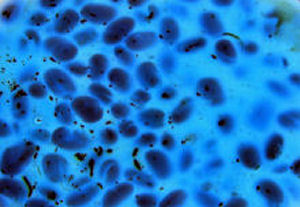
In a brilliant paper, worthy of a Crystal Mark from the Plain English Campaign, it persuasively 'demonstrates for the first time' the link between cancer of the colon and bacteria able to attach themselves firmly to cells inside the colon. Up to 100 were found hiding in a single cell.
Not only that, but the research scientists also say their study has uncovered the mechanism the bacteria uses to shut off the colon cells' ability to protect themselves against dangerous genetic mutation. This may be how the bacteria possibly causes colon cancer, but proof will only come from further study.
Interestingly, they note a 'striking similarity' with the bacteria helicobacter pylori, which also interferes with the mechanisms of gastric cells and causes stomach cancer. For a long time H.pylori as the known cause of stomach ulcers was ignored by the medical establishment too, while doctors still hector patients about helping themselves by avoiding stress (for pity's sake!).
With more and more research like University of Edinburgh's study coming to light - but repeatedly ignored by frontline medical staff - how long do we have to wait in pain and ill health before our doctors take a closer look at the infections we have each collected in our bodies? Until it's too late?